
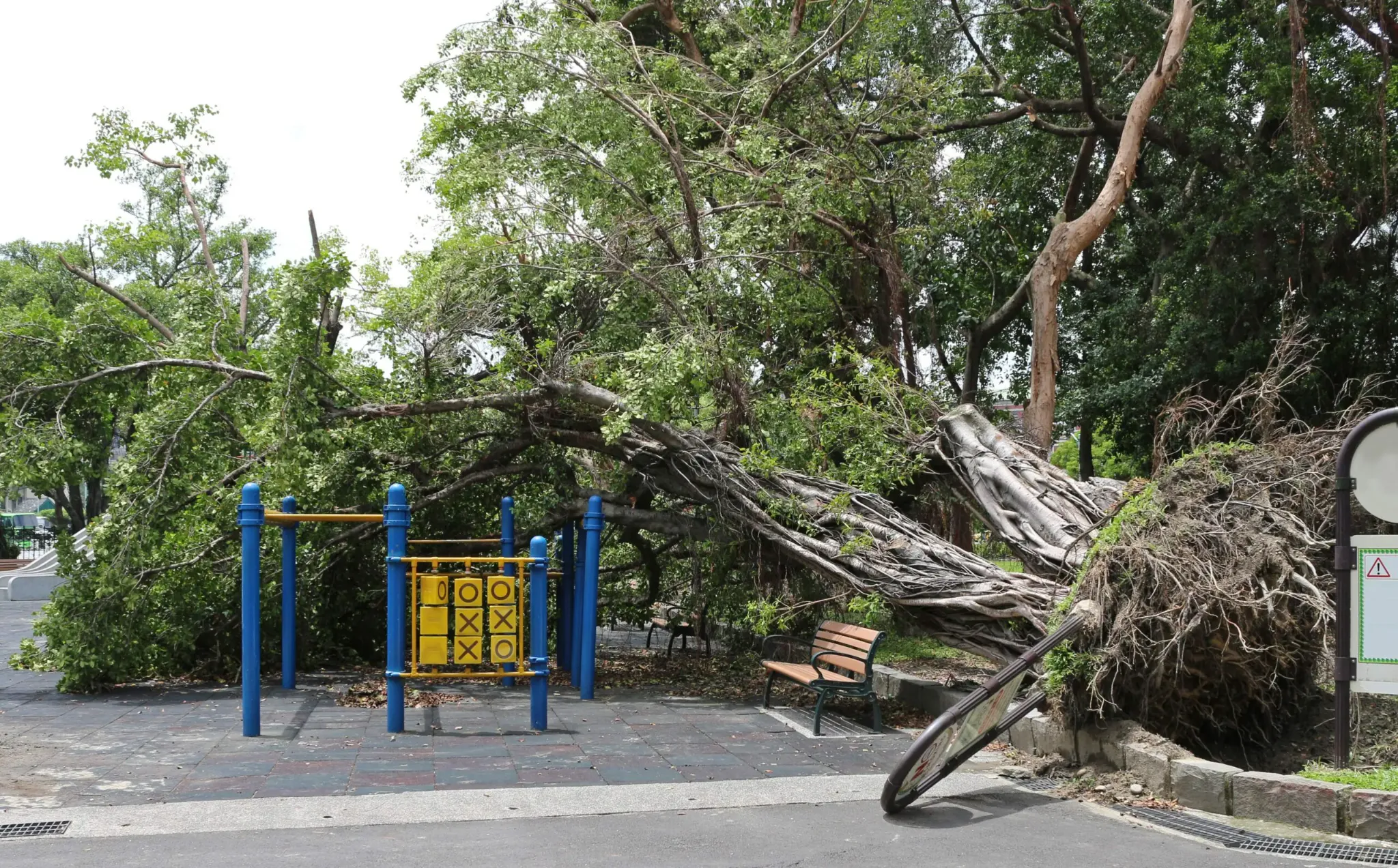
CLAIM :: PAEM-REC-01
CONTROL :: DOCUMENT / APPROVE / RECONCILE
Storm Damage Assessment & Claims Support
Document the loss. Coordinate the adjuster workflow. Release permanent work against an approved scope and price.
RECORD CONTROL
Insurance Workflow
STATUS :: EVIDENCE PRESERVED
Loss documented
Carrier notified
Scope adopted
File reconciled
01
Assess the loss
02
Select the claim path
03
Approve scope + price
04
Verify + reconcile
Decision gate
File the claim—or retain the loss?
A rapid assessment gives ownership an early view of safety, likely scope, cost, deductible exposure, and operational impact.
Larger properties may choose to self-fund a loss. Make that decision from documented conditions and preliminary scope—not from an unverified promise that the work will be covered.
LOSS
Damage extent
Hazards, structures, access, debris, and likely permanent work
COST
Preliminary cost
Assessment, mobilization, equipment, hauling, and restoration
POLICY
Policy position
Deductible, limits, exclusions, duties, and emergency provisions
OPS
Operational impact
Access restriction, business interruption, and recovery time
PATH A :: CLAIM
Notify promptly · preserve evidence · follow carrier instructions
PATH B :: SELF-FUND
Retain assessment · approve internally · preserve the operating record
Claim control sequence
Document first. Release permanent work after approval.
The claim record should show what happened, what required immediate action, what permanent work was proposed, who approved it, and what was completed.
01
Document
Capture the loss before debris or conditions change
02
Notify
Policyholder reports the loss and confirms claim instructions
03
Inspect
Support adjuster review with field records and scope data
04
Authorize
Adopt the permanent scope, price, and approval record
05
Perform
Track vendor work and approved changes
06
Reconcile
Connect invoices, completion, QA/QC, and claim closeout
CONTROL RULE :: SCOPE + PRICE + AUTHORITY
Except for necessary protective action, avoid completing permanent work first and attempting to negotiate reasonable reimbursement afterward. Establish the carrier or ownership authorization path before release.
ROLE CONTROL
Keep every party inside its role.
The contractor supplies field capability and an estimate. The insurer or adjuster determines coverage. Peachtree keeps the arboricultural scope, field record, and vendor work connected.
Coverage is not a contractor promise.
Confirm coverage and approval directly with the carrier or adjuster before relying on reimbursement.
Failure controls
Four avoidable ways the record breaks.
Most claim friction begins when evidence, authority, scope, and cost stop matching.
Necessary emergency stabilization should be documented as it occurs. Permanent recovery should move through a defined approval gate whenever conditions permit.
NO EVIDENCE
Debris moves before photographs, location, quantities, and conditions are recorded.
NO AUTHORITY
A contractor begins non-immediate work without a documented release from ownership or the insurer.
NO ADOPTED SCOPE
The adjuster, ownership, and contractor are working from different descriptions of the loss.
NO COST RECORD
Pricing, changes, invoices, and completion cannot be reconciled to the authorized work.
CLAIM RECORD
Build the file while the field work happens.
The record should connect the initial loss, adjuster workflow, authorized scope, contractor activity, and completion evidence without reconstructing the event later.
Built for HOAs & property managers, Commercial campuses, Municipal & public entities, National & multi-site portfolios.
OFFICIAL GUIDANCE
Georgia insurance guidance recommends documenting damage, notifying the insurer promptly, retaining receipts, and avoiding significant permanent repairs before insurer inspection.
This page provides operational information, not insurance, legal, or public-adjusting advice. Policy terms and applicable law control.
FAQ
Insurance Claims Support questions
Does Peachtree determine whether the loss is covered?
No. Coverage and claim-payment decisions belong to the insurer under the policy. Peachtree provides arboricultural assessment, scope information, estimates, field documentation, contractor coordination, and QA/QC. Policy interpretation or claim representation should be handled by the policyholder and appropriately licensed insurance professionals.
Should permanent tree work begin before the adjuster inspection?
Immediate work may be necessary to protect people or property, but significant permanent work can change or remove evidence. Document conditions first, notify the insurer promptly, and confirm the required inspection and authorization path before releasing non-immediate work whenever conditions allow.
Can a contractor promise that insurance will cover the work?
A contractor can provide a scope and estimate, but should not be treated as the source of a coverage decision. Confirm coverage, approvals, and claim requirements directly with the insurer or adjuster before relying on reimbursement for permanent work.
Why conduct a rapid assessment before deciding to file?
A rapid assessment helps ownership understand safety conditions, likely work scope, preliminary cost, deductible exposure, operational disruption, and available records. Larger properties may use that information to decide whether to report a claim or self-fund the loss.
What records should be retained?
Retain the initial report, photographs or video, property and tree locations, damage descriptions, estimates, authorized scope, carrier and adjuster communications, approvals, invoices, receipts, field progress, changes, completion photographs, and QA/QC notes.
Related
Other services we coordinate
Emergency Tree Crew Mobilization
Mobilize a controlled field response with rapid damage assessment, priority-based dispatch, scope control, and documented QA/QC.
Learn moreEmergency Preparedness Planning
Define exposure, authority, insurance requirements, contractor coverage, and activation thresholds before severe weather becomes an incident.
Learn moreEmergency Tree Preparedness & Storm Response
Build the plan before the storm, activate qualified crews when conditions change, and protect the record before debris moves.
Learn moreA defensible claim record connects the loss, adjuster workflow, authorized scope, vendor work, and completion evidence.
Get an EstimateControl the claim record before permanent work begins.
Tell us where damage occurred and whether the carrier has been notified. Peachtree will organize the field assessment, scope record, approvals, vendor work, and completion evidence.