
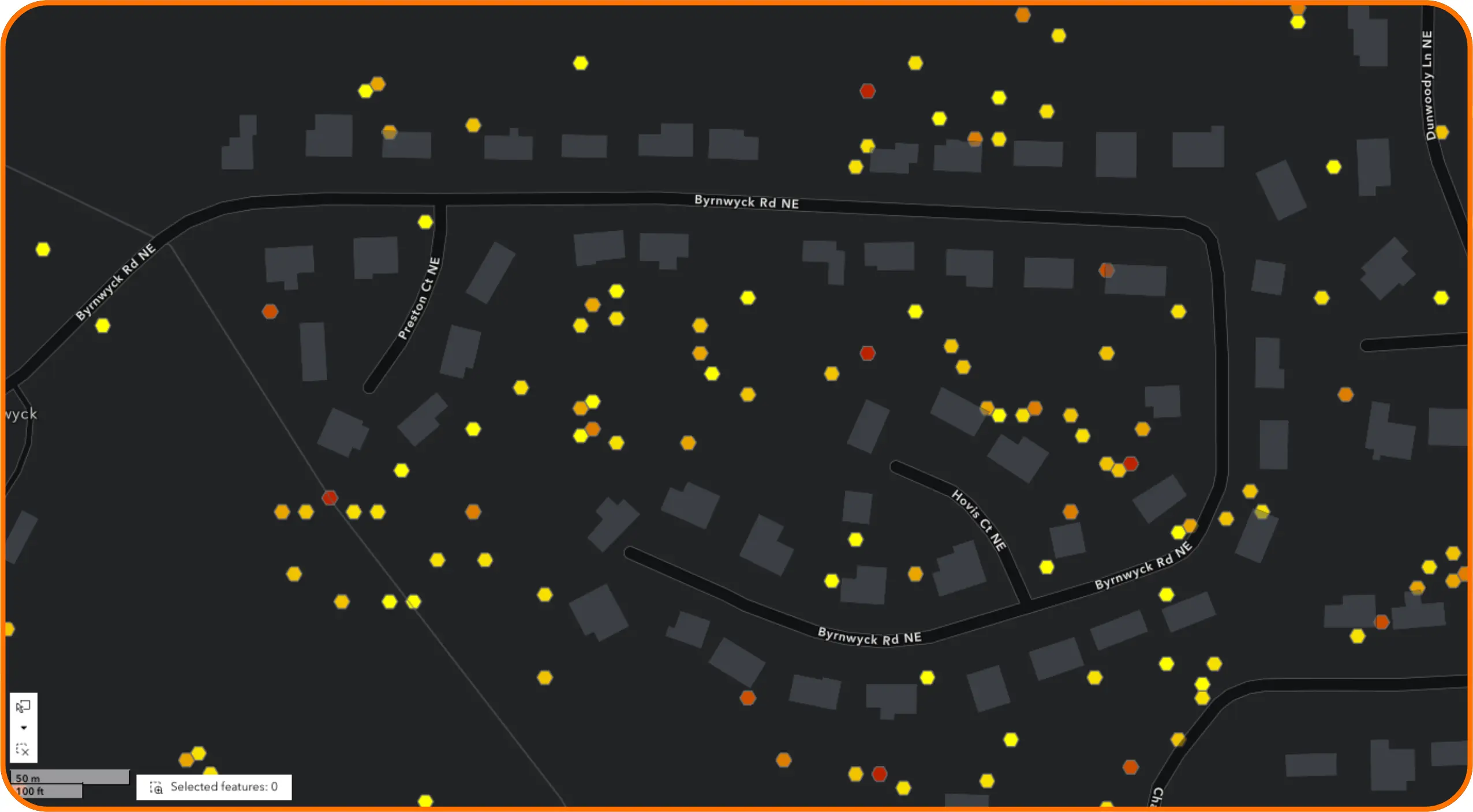
PLAN :: PAEM-PREP-01
MODE :: READINESS
Emergency Preparedness Planning
Define exposure, decision authority, insurance requirements, and field capacity before severe weather becomes an incident.

READINESS SYSTEM
Preparedness Plan
STATE :: CONTROLLED
Exposure mapped
Authority assigned
Policy reviewed
Capacity positioned
01
Know the exposure
02
Assign the authority
03
Position the resources
04
Define activation
Plan architecture
Six records drive every emergency decision.
Preparedness is an operating system: property intelligence, policy requirements, command authority, field capacity, and financial controls assembled before an incident.
The plan converts known exposure into assigned actions. Each record has an owner, a review date, and a decision it must support.
Readiness cycle
Build it. Test it. Keep it current.
A plan is operational only when the underlying record, decision authority, and contractor coverage remain current.
Inventory exposure
Sites, canopy, access, assets
Review coverage
Policy, duties, contacts
Set authority
Roles, approvals, reserves
Position resources
Vendors, equipment, geography
Exercise + update
Test, correct, review annually
REVIEW INTERVAL :: ANNUAL + MATERIAL CHANGE
Revalidate before severe-weather season.
POLICY CONTROL :: PRE-LOSS
Review coverage before the weather changes.
Confirm the questions, contacts, notice duties, emergency-work provisions, and documentation expectations with the broker, agent, or carrier before an incident.
Coverage and approval decisions remain with the insurer. The preparedness record organizes questions and responsibilities; it does not determine coverage.
COMMAND AUTHORITY MATRIX
Activation protocol
Move from watch to field action by threshold.
Predefined states prevent hesitation, uncontrolled dispatch, and conflicting instructions when conditions change.
Criteria should reflect the portfolio’s geography, occupied structures, critical access, utility exposure, and available field capacity.
FIELD COVERAGE :: AOI
Vendor · equipment · access · travel
PRE-POSITIONING
Secure the response path before demand peaks.
PLAN OUTPUT
A deployable record—not a binder on a shelf.
Each deliverable should be assigned, accessible, and current enough to support a decision during the first operational period.
Built for HOAs & property managers, Commercial campuses, Municipal & public entities, National & multi-site portfolios.
FAQ
Preparedness Planning questions
What should an emergency preparedness plan contain?
The plan should identify covered properties, critical access and priority assets, known tree and site exposure, emergency contacts, decision authority, spending thresholds, communications, contractor coverage, equipment needs, insurance contacts, documentation requirements, and clear activation criteria.
Why review insurance before a disaster?
A pre-loss review helps ownership understand relevant deductibles, limits, exclusions, notice duties, emergency-work provisions, documentation expectations, and who must be contacted before non-immediate work proceeds. Coverage decisions belong to the insurer; policy questions should be reviewed with the broker, agent, or carrier before an event.
What does pre-positioning contractors mean?
It means identifying qualified contractors, service areas, equipment, access requirements, and authorization procedures in advance, then confirming availability as a credible threat develops. It does not guarantee capacity, but it reduces the work required to locate and qualify resources during a constrained market.
When should the plan be activated?
Activation thresholds are property-specific. Common triggers include forecast exposure, likely impact to occupied structures or critical access, utility conflicts, confirmed tree damage, or a material reduction in contractor availability. The plan should define watch, staging, and response actions before those conditions occur.
How often should the plan be reviewed?
Review it at least annually, before severe-weather season, and whenever covered properties, contacts, insurance arrangements, access conditions, vendors, budgets, or decision authority change.
Related
Other services we coordinate
Emergency Tree Crew Mobilization
Mobilize a controlled field response with rapid damage assessment, priority-based dispatch, scope control, and documented QA/QC.
Learn moreStorm Damage Assessment & Claims Support
Document the loss, coordinate the adjuster workflow, control the authorized scope, and preserve the record from first assessment through closeout.
Learn moreEmergency Tree Preparedness & Storm Response
Build the plan before the storm, activate qualified crews when conditions change, and protect the record before debris moves.
Learn moreTree Management Plans
A technology-enabled annual program that connects recurring tree care, emergency readiness, vendor coordination, and year-over-year budgets.
Learn moreGIS Digital Tree Inventory
A location-based inventory that turns individual trees into an actionable property-wide maintenance plan.
Learn morePreparedness turns property intelligence, policy requirements, decision authority, and field capacity into one deployable operating plan.
Get an EstimateBuild the plan before the next activation.
Tell us which properties or portfolio need coverage. Peachtree will define the planning inputs, identify operational gaps, and build the readiness record.