Skip to content
Peachtree Arborists
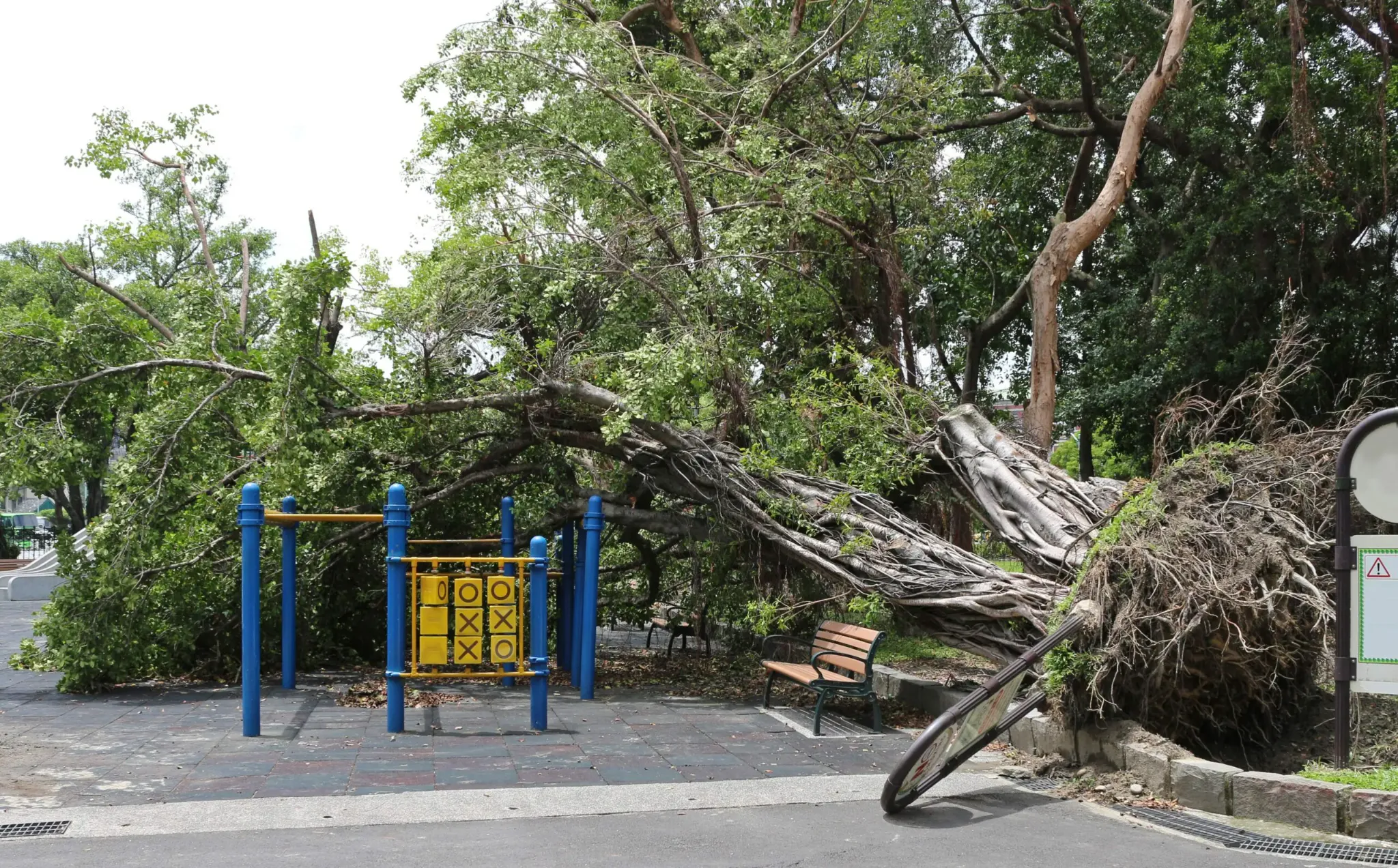
Large fallen tree requiring emergency residential tree service

RESIDENTIAL :: EMERGENCY TREE SERVICE

SAFETY :: ASSESSMENT :: REMOVAL

Emergency Management

Residential Emergency Tree Service

Rapid help for fallen, uprooted, or damaged trees affecting your home, driveway, vehicle, or access.

Peachtree Arborists Emergency Management seal

HOME RESPONSE

One-Property Workflow

ASSESS :: COORDINATE :: VERIFY

Tree on structure
Blocked access
Unstable tree or limb
Insurance documentation

FIRST

Protect people and stay clear

NEXT

Document and assess

THEN

Stabilize, remove, and close out

IMMEDIATE SAFETY

Power line involved? Stay away.

Assume every downed line is energized. Keep people and pets away, do not touch the tree or line, and contact 911 and the serving electric utility. Tree work should wait until the electrical hazard is addressed.

Georgia Power safety guidance

Homeowner triage

Identify what is threatened and what must happen first.

A fallen tree can be urgent without every part of the cleanup being an emergency. Establish safety, priority, and scope before the field work expands.

The assessment determines whether the next action is emergency stabilization, access clearing, technical removal, insurer documentation, or scheduled follow-up.

NOWImmediate dangerInjury, fire, active collapse, or electrical contactCall 911 / utility · stay clear
P1Home or access affectedTree on a structure, vehicle, driveway, or occupied areaDocument safely · request assessment
P2Unstable tree or limbVisible failure without current contact or blockageRestrict the area · schedule priority review
P3Storm cleanupStable debris or follow-up permanent workDefine scope · authorize · complete

What happens next

A clear path from first call to a safe property.

The response stays focused on the immediate condition, the required equipment, the authorized work, and a complete closeout record.

01

Stay clear

Protect people and isolate the affected area

02

Send the facts

Address, photographs, access, and what is affected

03

Assess

Confirm hazard, method, equipment, and priority

04

Stabilize + remove

Release the required emergency or permanent scope

05

Document + close

Verify cleanup, evidence, invoices, and follow-up

SEND

Address · safe photographs · access

IDENTIFY

What is hit · power lines · active movement

CONFIRM

Contact · insurer status · authorization

TREE ON A HOME

Protect the structure without losing the record.

When conditions allow, photograph the damage, notify the insurer, and confirm inspection requirements before significant permanent work changes or removes evidence.

Georgia insurance claim guidance

IMMEDIATE

Prevent further harm.

Restrict unsafe areas.

Address electrical or life-safety hazards.

Stabilize active conditions when required.

Document every necessary action.

PERMANENT

Release the full scope.

Confirm removal and hauling requirements.

Review estimate and authorization.

Coordinate insurer inspection when applicable.

Verify completion and cleanup.

Coverage and payment decisions remain with the insurer under the policy.

Homeowners insurance 101

Know the deductible, the adjuster, and the approval sequence.

Coverage depends on the policy and the cause of loss. These three concepts determine how much the homeowner may owe, who evaluates the claim, and when permanent work should proceed.

01

The deductible

The deductible is the portion of a covered loss the policyholder is responsible for before insurer payment. It may be a fixed amount or, for some wind events, a percentage. Check the declarations page before deciding whether to file.

02

The adjuster

An adjuster investigates the claim, reviews damage and estimates, and recommends settlement based on the policy. Peachtree provides tree assessment, photographs, scope, pricing, and work records; the carrier determines coverage and payment.

03

Approval before work

Protect people and prevent further damage first. When conditions safely allow, document the loss, notify the carrier, and confirm inspection, scope, and pricing requirements before permanent removal or repairs alter the evidence.

Coverage A vs. Coverage B

Which insured structure did the tree damage?

Homeowners policies commonly separate the dwelling from detached structures. The labels are standard, but limits, deductibles, causes of loss, exclusions, and tree-removal provisions vary by policy.

Tree removal or debris expenses can be subject to separate conditions and limits. Do not assume that coverage for the damaged structure automatically pays every cost associated with the tree.

COVERAGE A :: DWELLING

The home and attached structures.

Coverage A generally applies to the house and structures attached to it. When a tree damages the roof, an attached garage, or another part of the dwelling, this is usually the first property-coverage section to review.

COVERAGE B :: OTHER STRUCTURES

Detached structures on the property.

Coverage B generally applies to structures separated from the house, such as a detached garage, shed, or fence. Its limit is often tied to the dwelling limit, but the declarations and policy form control.

NAIC homeowners coverage overview

Neighboring trees

Tree ownership does not automatically decide responsibility.

When a neighbor’s tree falls, the damaged property owner will often begin with their own insurer. Whether the tree owner is legally responsible depends on the facts, the tree’s condition, what the owner knew or reasonably should have known, and applicable state law.

STORM EVENT

No known defect

If an apparently sound tree fails during wind or severe weather, the neighboring owner is not automatically responsible simply because the trunk stood on their property.

KNOWN HAZARD

Visible or documented risk

Liability may be considered when an owner knew or reasonably should have known that a tree was diseased, decayed, dead, or otherwise dangerous and did not take reasonable action.

FIRST RECORD

Document before cleanup

Photograph the tree’s origin, trunk, failure point, visible defects, damaged property, and immediate protective work. Notify the property owner and applicable insurers promptly.

A dated arborist report or written warning can be important evidence that a specific hazard was communicated. It is not the only way knowledge may be established, and notice by itself does not automatically prove negligence.

Georgia Court of Appeals discussion of hazardous-tree knowledge

SUBROGATION + PRIOR NOTICE

Preserve the facts before responsibility is decided.

Subrogation is the insurer’s right, after paying a covered claim, to seek recovery from a third party believed to be responsible for the loss. Photographs, reports, notices, estimates, and preserved tree evidence can become important to that review.

DEAD OR DECLINING TREE

Condition alone does not settle the claim.

Coverage and liability can depend on the cause of loss, visible condition, prior knowledge, warnings, inspection history, maintenance response, resulting damage, and exact policy language.

DOCUMENTED NOTICE

Create a usable record.

If a neighboring tree presents a specific concern, obtain an arborist assessment, send a dated written notice with the report or photographs, keep proof of delivery, and retain follow-up communications.

Educational information only—not insurance, legal, or public-adjusting advice. Policy language, claim facts, insurer decisions, and applicable law control.

SERVICE SCOPE

Emergency work sized for one property.

Residential response uses the same assessment, contractor qualification, scope control, and documentation standards in a simpler homeowner workflow.

01Fallen or uprooted trees
02Trees and limbs on homes
03Blocked driveways and access
04Trees affecting vehicles
05Hanging or broken limbs
06Technical rigging and crane access
07Debris hauling and cleanup
08Insurance-oriented work records

BEFORE THE NEXT STORM

Reduce preventable emergency work.

An arborist assessment and planned pruning or removal can identify priority work before wind, saturated soil, or canopy defects become an incident.

View proactive tree management

FAQ

Residential Emergency questions

What should I do if a tree is touching a power line?

Stay away and assume the line is energized. Keep other people and pets away, do not touch the tree or line, and contact 911 and the serving electric utility. Tree work should not begin until the electrical hazard and required utility coordination are addressed.

What information should I send when requesting help?

Provide the property address, your contact information, what the tree or limb is affecting, whether anyone is injured, whether power lines or utilities are involved, whether emergency access is blocked, and clear photographs taken only from a safe location.

Can a tree on a house be removed immediately?

Immediate stabilization may be necessary when a tree creates an active safety or weather-exposure concern. When conditions allow, document the damage and contact the insurer before significant permanent work changes or removes evidence. The required sequence depends on safety, access, the structure, and insurer instructions.

Will homeowners insurance cover emergency tree work?

Coverage depends on the policy, cause of loss, damaged property, applicable limits, deductibles, exclusions, and insurer review. Peachtree can provide assessment, scope, estimates, photographs, and work records, but the insurer determines coverage and payment.

How does an insurance deductible apply to tree damage?

A deductible is the portion of a covered loss the policyholder is responsible for before insurer payment. The amount may be fixed or percentage-based depending on the policy and event. If covered damage does not exceed the applicable deductible, the insurer may owe no payment. Review the declarations page and confirm the applicable deductible with the carrier.

What is the difference between Coverage A and Coverage B?

Coverage A generally applies to the dwelling and attached structures. Coverage B generally applies to detached structures such as a detached garage, shed, or fence. Limits, covered causes of loss, deductibles, exclusions, and tree-removal benefits vary, so the declarations and full policy should be reviewed.

Who is responsible when a neighbor’s tree falls on my property?

Tree ownership alone does not automatically determine responsibility. The damaged property owner will often begin with their own insurer. A neighboring owner may be legally responsible when the facts show that they knew or reasonably should have known the tree was dangerous and failed to take reasonable action. The result depends on the evidence and applicable state law.

Does a neighbor need written notice before negligence can be considered?

Not necessarily. Written notice and an arborist report can be important evidence that a specific hazard was communicated, but actual or constructive knowledge may be shown in other ways. Notice does not automatically prove negligence, and the absence of written notice does not automatically rule it out. A qualified attorney should address legal responsibility for a specific loss.

What is subrogation after a tree-damage claim?

After paying a covered claim, an insurer may have the right to seek reimbursement from a third party believed to be responsible. Homeowners should preserve photographs, arborist reports, notices, correspondence, estimates, invoices, and available tree evidence and follow their insurer’s instructions.

Who performs the work?

Physical work is performed by credentialed, insured contractors selected for the tree condition, property access, rigging, crane or lift requirements, hauling needs, and other site constraints. Peachtree coordinates the scope, vendor, documentation, and QA/QC.
Residential emergency response starts with safety, then connects assessment, the right field crew, authorized work, and a complete property record.

Get an Estimate

Tell us what happened and what the tree is affecting.

Send the property address, safe photographs, access information, and whether a home, vehicle, utility, or driveway is affected. Peachtree will define the next action and coordinate the appropriate contractor.