PRESERVE01
Can the tree be retained?
Evaluate health, structure, targets, and practical mitigation before removal is recommended.
TREE REMOVAL :: ASSESS / PLAN / EXECUTE
ARBORIST-LED FIELD WORK
Residential · commercial · portfolio
Start with an arborist assessment. Define the safest method, approvals, access, property protection, and cleanup before the first cut is made.
ASSESS
Removal, preservation, or monitoring
PLAN
Method, permits, access, and protection
CLOSE
Debris, stump option, and final record
Decision first
An arborist-led assessment establishes whether the tree should be removed, what approvals are required, and how the work can be completed without creating a second problem on the property.
Evaluate health, structure, targets, and practical mitigation before removal is recommended.
Confirm the reason, site constraints, ownership authority, and any permit requirements.
Match the crew, equipment, rigging plan, drop zone, and cleanup scope to the property.
Method + site control
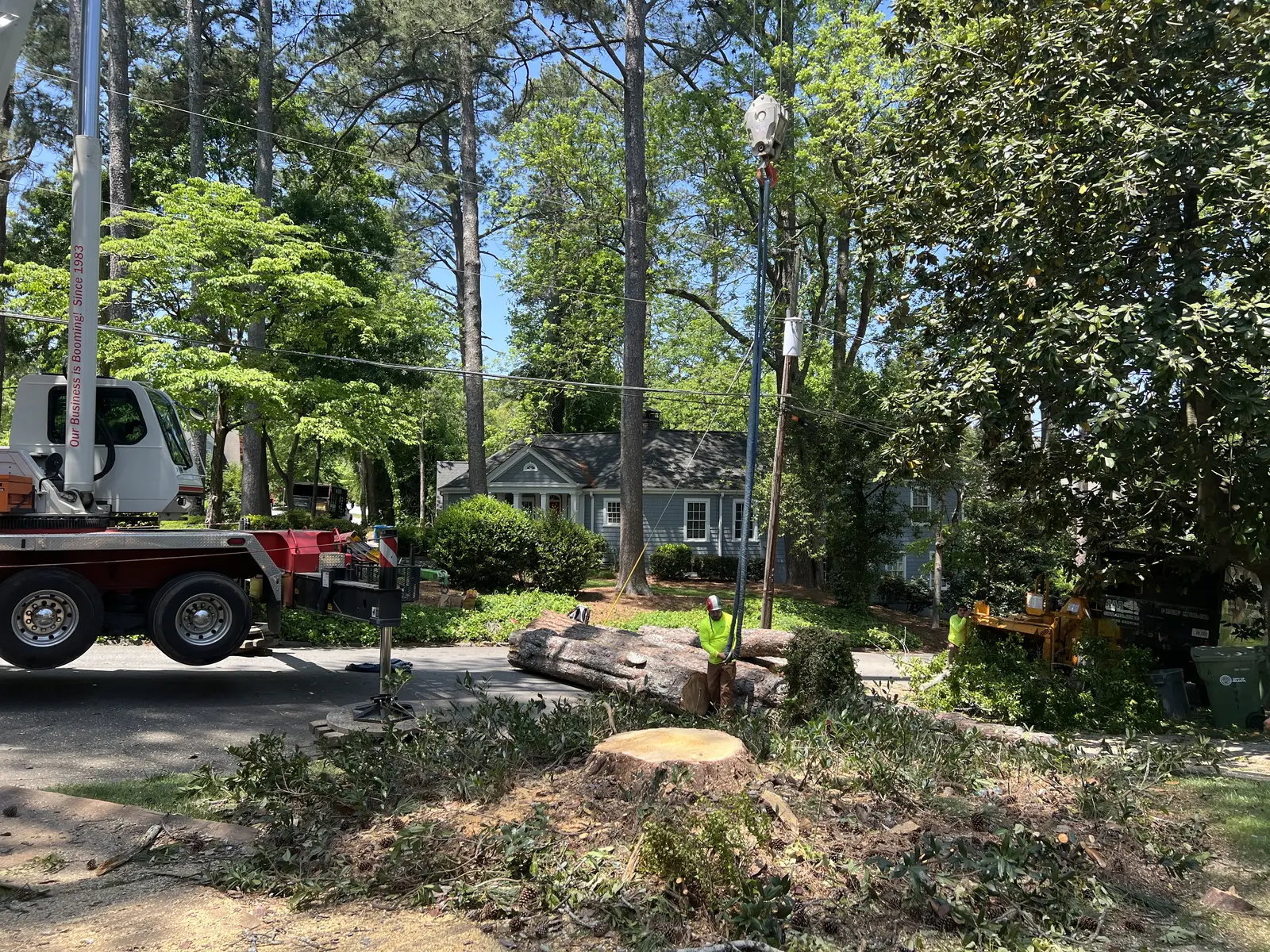
A tree beside a home, inside a courtyard, or behind restricted access cannot be treated like an open-site removal. The scope should identify the work zone, access, equipment, rigging, protection measures, debris path, and final site condition before the crew arrives.
STANDARD
For sites with a usable drop zone, clear equipment access, and adequate separation from structures and utilities.
TECHNICAL
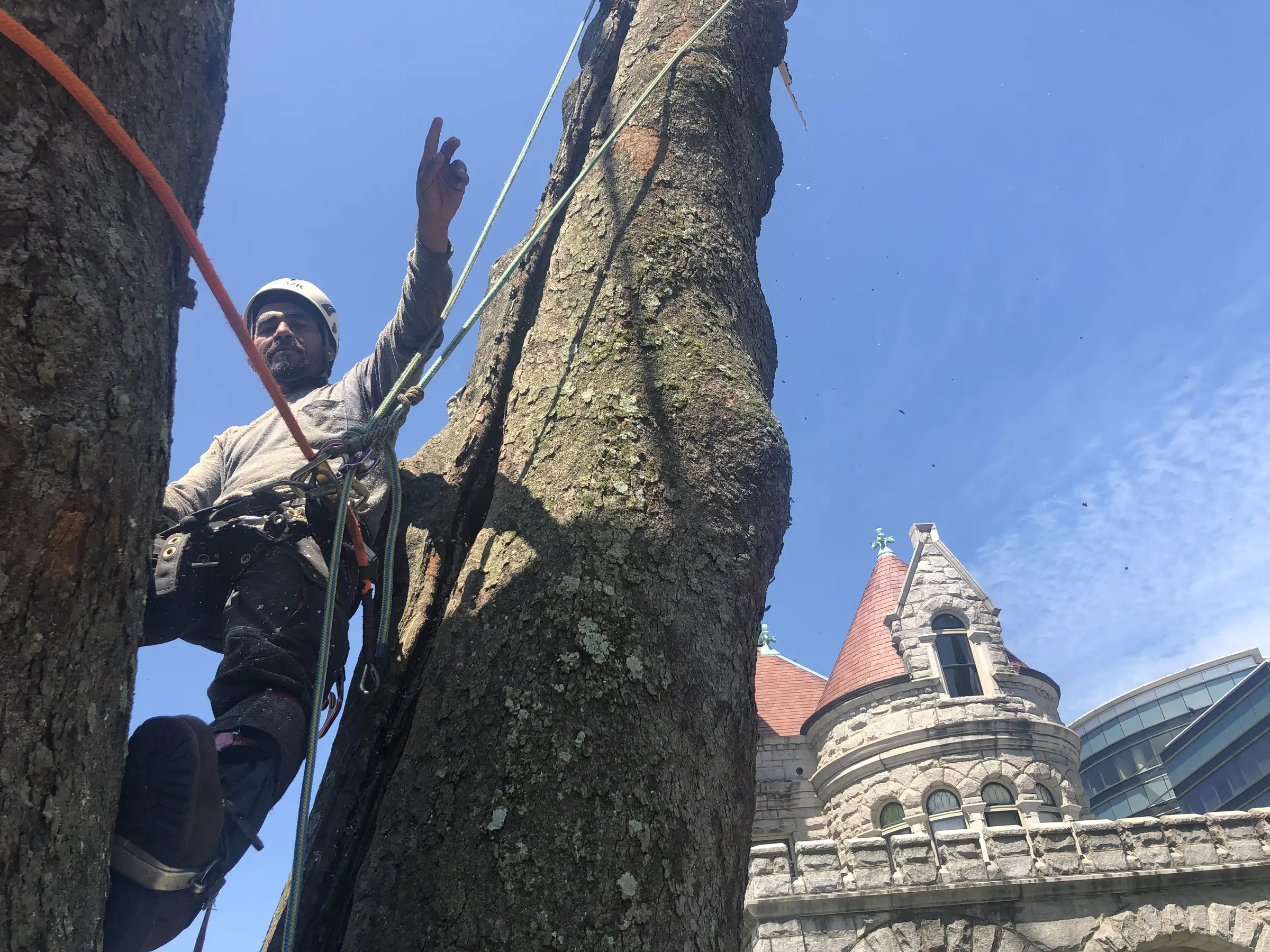
For tight sites, compromised trees, nearby structures, limited access, or conditions requiring climbing and rigging.
What changes the estimate
Two trees of the same size can require very different removal plans. A tree in an open lawn may allow direct equipment access and controlled dropping. The same tree beside a house, fence, sidewalk, pool, or planted landscape may need smaller sections, more rigging, additional labor, or specialized equipment.
COST + PROTECTION TRADEOFF
Grass and planting beds can often be protected with mats, smaller equipment, additional rigging, or a different debris route. Requiring minimal turf disturbance can materially increase time and cost. The estimate should state which surfaces cannot be contacted, what temporary disturbance is acceptable, and what restoration—if any—is included.
TARGETS
Distance to the home, roof, fence, pool, driveway, sidewalk, utilities, and other fixed targets determines how much control the removal requires.
ACCESS
Gate width, slope, soft ground, overhead lines, staging room, traffic, and the distance from the tree to the debris route affect equipment and labor.
TREE
Height, trunk diameter, canopy spread, lean, defects, decay, species, and whether the tree can be climbed all change the removal plan.
PROTECT
The acceptable level of impact to turf, planting beds, irrigation, and nearby landscape features should be agreed before pricing and scheduling.
METHOD
Free-drop, sectional removal, climbing, roping, technical rigging, aerial lift, crane, loader, or combinations of these methods carry different time and equipment costs.
CLOSE
Wood handling, hauling, chipping, log removal, stump grinding, backfill, and the requested cleanup standard complete the scope.
NON-NEGOTIABLE
People, occupied structures, utilities, and agreed protected property remain outside the acceptable-impact zone.
AGREED TOLERANCE
Turf, planting beds, access routes, and other landscape surfaces are discussed before the method and price are finalized.
DOCUMENTED SCOPE
Protection measures, exclusions, cleanup, and restoration responsibilities belong in the written estimate.
Controlled scope
Assessment, authorization, field work, and closeout remain connected so the selected crew arrives with a clear scope.
01
An arborist confirms whether removal is warranted and evaluates hazards and access.
02
We price the selected removal method, access, equipment, property-protection standard, acceptable landscape impact, debris handling, and final cleanup scope.
03
We coordinate any required permits and schedule a qualified vendor with suitable equipment.
04
A credentialed, insured vendor performs the removal with site and property protection.
05
We haul debris and, if requested, grind the stump.
Scope checklist
PERMITS + AUTHORIZATION
Tree-removal rules vary by city, county, property type, tree condition, and project. The planning step should identify the jurisdiction, determine whether the tree is regulated, confirm ownership and boundary questions, assemble the required arborist information, and obtain written authorization before work begins.
The City publishes separate application paths for general tree work and for removal of dead, dying, or hazardous trees by private contractors. Requirements outside Atlanta may differ.
FAQ
Permit and posting requirements depend on the jurisdiction, property, tree condition, and proposed work. The City of Atlanta publishes tree-work permit applications, including a separate path for removal of dead, dying, or hazardous trees by private contractors. Before scheduling, the scope should confirm the governing jurisdiction, ownership, any property restrictions, whether the tree is regulated, and which written approvals are required. Rules outside Atlanta may differ.
Price is based on more than tree size. Important factors include height and diameter, condition and stability, lean, species, proximity to homes, roofs, fences, pools, sidewalks, utilities, and other targets, access for crews and equipment, slope and ground conditions, traffic or staging constraints, the removal method, debris handling, stump work, and the agreed protection and cleanup standard. Two similarly sized trees can have very different costs when one stands in an open lawn and the other must be dismantled in small rigged sections beside structures.
Crews can use climbing, sectional removal, ropes, technical rigging, aerial lifts, cranes, ground protection mats, smaller equipment, and controlled debris routes to reduce impact. The practical method depends on the tree and site. Requiring minimal turf or landscape disturbance may add labor, rigging, equipment, or time and can materially increase cost. The estimate should distinguish surfaces that cannot be contacted from areas where temporary disturbance is acceptable, and should state whether repair or restoration is included.
Not every problem tree needs removal. An ISA Certified Arborist assesses structure, health, and risk first — in many cases pruning or ongoing management is the better option. We recommend removal only when it is the appropriate course.
Stump grinding is available as an add-on to removal. It is typically scoped and priced separately because access and stump size vary.
On tight or near-structure sites, crews use technical rigging to lower sections in a controlled way and take measures to protect landscaping, hardscape, and structures. The method is planned during the arborist assessment.
Related
Build the plan before the storm, activate qualified crews when conditions change, and protect the record before debris moves.
Learn moreA technology-enabled annual program that connects recurring tree care, emergency readiness, vendor coordination, and year-over-year budgets.
Learn moreA controlled removal starts with the right decision, then connects method, approvals, property protection, field work, and cleanup.
Get an EstimateTell us about the property and what you’re seeing. Peachtree helps define the priority, preserves the record, and matches the scope with a credentialed local vendor.